
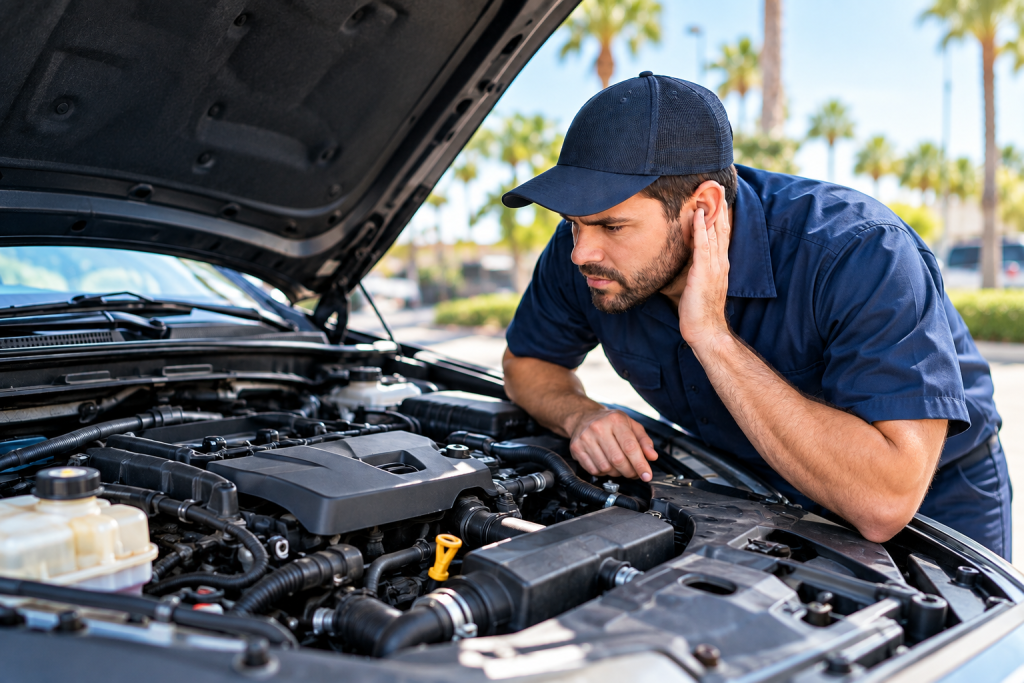
Most drivers know their car has a battery, but far fewer understand the part that keeps that battery alive while they drive. The alternator is one of the hardest working components under the hood, and when it fails, the whole car can shut down with little warning. This simple Q&A explains what an alternator does, how to spot trouble, and what to do about it.
What Does an Alternator Do?
The alternator is your car’s electrical generator. Once the engine is running, it produces the electricity that powers everything in the vehicle, including the headlights, the radio, the power windows, the dashboard, the fuel pump, and the engine computer. It also recharges the battery so you have enough power to start the car next time.
It works by converting mechanical energy into electrical energy. A belt connected to the engine spins a rotor inside the alternator, and that motion generates alternating current. A part called the rectifier converts it to direct current, which is what your car uses, and a voltage regulator keeps the output steady so it does not damage sensitive electronics.
Isn’t That the Battery’s Job?
This is the most common misunderstanding. The battery’s main job is to start the engine and provide a little backup power. Once the engine is running, the alternator takes over. If the alternator stops working, the car runs on whatever charge is left in the battery, and that usually lasts only a short time before everything shuts down.
This is also why a failing alternator is often mistaken for a bad battery. A battery that keeps dying may simply not be getting recharged. Replacing the battery without testing the charging system can leave you with the same problem a week later.
What Are the Signs of a Failing Alternator?
Alternators usually give warning signs before they fail completely. Watch for the following:
- A battery or charging warning light on the dashboard
- Headlights and dashboard lights that dim or flicker, especially at idle
- A growling, whining, or squealing noise from the engine area
- Electrical accessories that act strangely, such as slow power windows or a weak radio
- A dead battery that keeps coming back, even after a jump start or replacement
- A smell like burning rubber or hot wires
- Difficulty starting the car, or the engine stalling while driving
Any one of these can point to the charging system. Several together are a strong signal to have it tested right away.
What Causes an Alternator to Fail?
Like any part, alternators wear out. The bearings inside can fail after years of spinning, the brushes can wear down, and the diodes in the rectifier can burn out. Heat is a major factor, since the alternator sits near the hot engine and works constantly.
Other causes include a worn or loose serpentine belt that cannot spin the alternator properly, oil or coolant leaking onto the unit, and corroded connections. For drivers near the coast, corrosion is a particular concern. Salty, moist air attacks electrical connections and metal components, which we explain in our article on coastal air and corrosion and how to protect your car in Chula Vista. Adding too many power hungry accessories, such as large stereo systems or extra lighting, can also overload an alternator.
How Long Does an Alternator Last?
Many alternators last somewhere between 80,000 and 150,000 miles, though the range varies by vehicle, driving conditions, and quality of the part. Stop and go traffic, heavy electrical loads, extreme heat, and a corrosive environment can shorten that lifespan. There is no fixed replacement schedule, so the best approach is to have the charging system tested during regular service and any time you notice symptoms.
Can I Keep Driving With a Bad Alternator?
Not for long. When the alternator fails, the car draws all of its power from the battery. Depending on the battery’s condition and how many accessories are running, you may have anywhere from a few minutes to maybe half an hour before the engine stalls. Turning off the radio, air conditioning, and other nonessential items can stretch that time slightly, but it is risky.
Stalling in traffic, on a freeway, or at night is dangerous. If your charging warning light comes on, head straight to a safe place rather than finishing a long errand. Stopping early also protects the battery, which can be damaged by deep discharging.
How Is an Alternator Tested?
A technician uses a multimeter or a dedicated charging system tester to check the voltage at the battery with the engine off and again with it running. A healthy alternator typically produces around 13.5 to 14.5 volts while the engine runs. A reading much lower or higher points to a problem. The technician will also inspect the belt, the pulley, the wiring, and the battery connections, since a faulty alternator is sometimes the result of a different failing part.
A proper test is quick and gives a clear answer. It is far better than guessing and replacing parts one by one.
Can the Alternator Be Repaired, or Does It Need Replacement?
Sometimes a failure comes from a simple issue, like a loose belt, a worn belt tensioner, or a corroded cable, and fixing it restores normal charging. When the alternator itself has failed internally, replacement is usually the most reliable solution. Rebuilt and new units are both available, and a technician can help you weigh cost against warranty and reliability.
It is wise to replace the serpentine belt at the same time if it shows wear, since the labor overlaps and a worn belt can cause the new alternator to fail early.
How Can I Help My Alternator Last Longer?
A few habits go a long way. Keep the battery terminals clean and tight, since poor connections force the alternator to work harder. Have the serpentine belt inspected regularly and replaced before it cracks or slips. Fix oil and coolant leaks promptly so fluids do not drip onto the unit. Avoid using the alternator to recharge a completely dead battery, because it is designed to maintain a charge, not to rebuild one from nothing. Use a proper charger or jump start and then have the system tested.
What Happens If I Ignore the Warning Signs?
Ignoring early symptoms usually leads to a breakdown. A weak alternator overworks the battery, shortening its life, and you may end up replacing both. Voltage problems can also stress other electronics. Eventually you may be left stranded with a car that will not start. If you ever find yourself in that situation, our guide to the top 10 reasons your car won’t start and how to get back on the road can help you work out the cause.
Is Alternator Repair Something a Mobile Mechanic Can Do?
Yes. Charging system diagnosis and alternator replacement are well suited to mobile service. A technician can test your battery and alternator at your home or workplace, confirm what is failing, and in most cases replace the part on the spot. That saves you from driving a car with a weak charging system to a shop, or paying for a tow.
Get Your Charging System Checked
The alternator quietly powers nearly everything in your car. When it starts to fail, the signs are usually there if you know what to look for: dim lights, warning lights, odd noises, and a battery that will not stay charged. Catching the problem early is easier, cheaper, and safer than waiting for a breakdown.
To learn more about our services, visit our homepage. If you suspect an alternator problem, reach out through our contact us page and we will come to you anywhere in the Chula Vista area.